When Is a Porch-Eave Wasp Nest Unsafe to Remove?
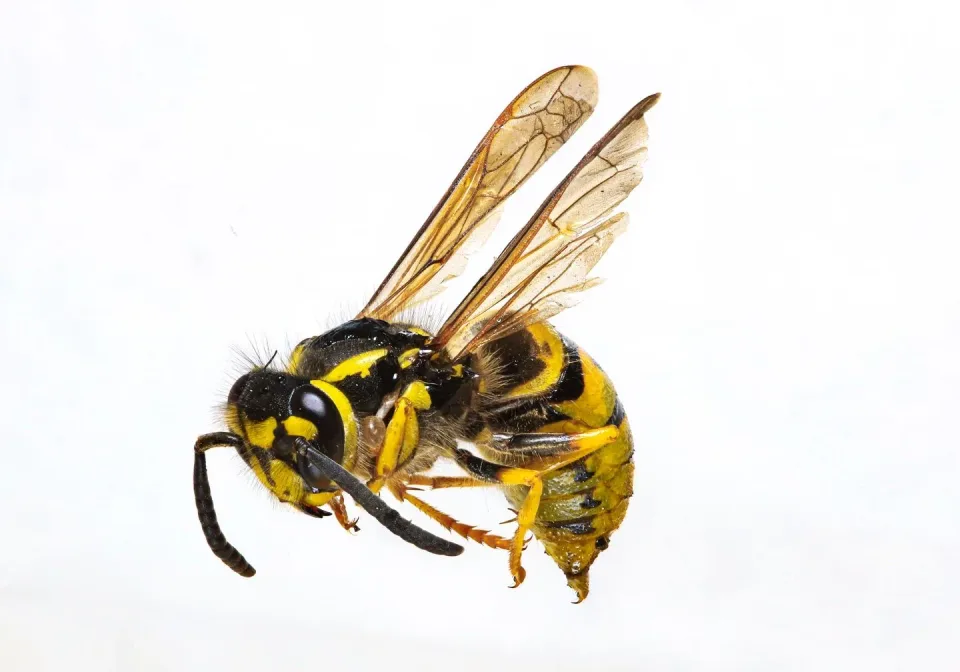
Wasps nesting beneath porch eaves are unsafe to remove yourself when the nest is active, hard to reach, or near people using the entrance. Don’t spray or knock it down if you cannot identify the nest clearly or retreat without passing close to it. A product label tells you where and how a pesticide may be used; an incorrect application can expose people, pets, or surfaces unnecessarily.
The treatment threshold is the point at which the evidence and risk justify intervention, not simply a few wasps flying past. Wyoming’s strong winds can displace pest barriers, so a quick DIY fix may not stay in place.
We inspect the eave and nearby harborage site the sheltered spot where wasps settle before recommending a plan. Near Yellowstone National Park, weather and access can vary considerably.
When should you avoid DIY wasp nest removal?
If wasps are entering a gap under the eave, gathering around the porch door, or reacting to movement nearby, leave the nest alone. Climbing a ladder while wasps are active puts you close to their flight path and can make a fall more likely if you have to move suddenly.
Don’t seal the opening: wasps may find another route into the porch structure or into the house. A nest tucked behind trim can be hard to see from the ground, and an unclear view is a poor basis for choosing a product.
High-elevation winters bring prolonged freezing temperatures, but a cold spell does not tell you whether a nest is inactive or whether a particular treatment is appropriate. Watch from indoors or a safe distance instead.
How can wasp nest identification change the decision?
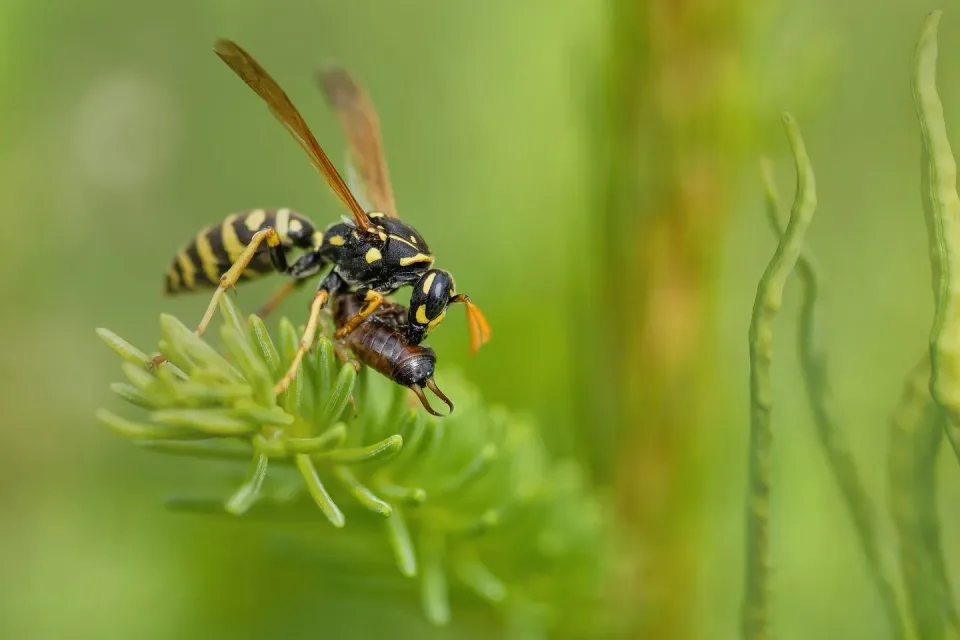
A small number of wasps passing through the yard does not by itself confirm a nest beneath your eaves. Watch for repeated traffic to one sheltered opening; that pattern helps distinguish a likely nest from occasional foraging.
Wasp nest identification also means recognizing the location and access problem, not just deciding that the insects look like wasps. A nest concealed behind a fascia board may require a different approach from one hanging in the open.
In our field work, the step people skip is checking whether wasps are using a gap that also opens into a soffit or porch cavity. That detail affects how the job can be approached and what areas need examination. For background on our process, read how our Wyoming crew approaches pest work.
When is a professional removal service the safer choice?
Call a trained provider when a nest is high, concealed, close to a doorway, or in a place where a ladder would leave you exposed. An active infestation wasps repeatedly occupying and defending the nest area calls for a plan based on the actual access and the surrounding property, rather than a guess from the ground.
We inspect the site, explain what we can confirm, and select a removal approach suited to the structure. DIY pest control may be reasonable for a clearly identified, low-risk problem only when you can follow the product directions and retreat safely; if either condition is missing, stop.
The Wyoming Department of Agriculture oversees commercial pesticide applicator licensing in applicable categories, which is part of how professional work is governed in the state. Near Devils Tower National Monument, strong winds can also unsettle loose exterior materials and affect how an eave is approached.
What should you expect from a careful nest inspection?
A practical inspection starts with the nest’s location, visible wasp traffic, access from the ground, and any nearby openings in the eaves. We look for whether the nest is exposed or concealed and consider how people use the porch, including children and pets.
A Safety Data Sheet gives hazard and handling information for a product; it is not a substitute for using that product according to its directions. Our crew explains the findings and the proposed work before treatment, so you know which area is involved and what to avoid during the job.
For more on this specific decision, see our guide to wasps under porch eaves and unsafe DIY removal. If you need help assessing a nest, Wasp Nest Removal is the relevant service to discuss.
Which Porch-Eave Wasp Removal Option Fits the Risk?
The right choice depends on whether the nest is exposed, reachable, and safely avoidable; these options do not serve the same purpose.
| Option | Best for | Key detail |
|---|---|---|
| Observe from a safe distance | Occasional wasps with no confirmed nest | Note whether traffic repeatedly enters one eave opening; do not approach to check. |
| DIY treatment | Clearly identified, accessible, low-risk situations | A one-gallon hand sprayer holds one gallon, but capacity alone does not make a treatment suitable for a nest. |
| Professional wasp nest removal | High, hidden, or porch-entry nests | An inspection can establish access and treatment needs before work begins. |
| Written findings for property managers | Rental or multi-unit properties | Written inspection findings help owners track the observed nest location and recommended next step. |
Label-compliant application rates matter: the product directions determine how it may be applied, so do not estimate a dose or improvise.
How to Prepare for Porch-Eave Wasp Removal
Before scheduling a pest removal service, describe where you see wasps entering and how close the nest is to a door or walkway. Keep people and pets away from the porch while the site is assessed. Rapid freeze-thaw cycles stress foundations and exterior seals, so mention any loose trim or open gaps you have noticed; that helps us plan the inspection without assuming the nest’s route.
-
Describe the location: Tell us which eave is involved and whether wasps repeatedly enter a visible gap.
-
Keep clear: Move stored items from treatment zones and keep children and pets away from the porch.
-
Confirm access: Explain whether the eave is reachable from the ground or requires a ladder.
-
Review the plan: Ask what area will be treated and what you should avoid during the work.
-
Follow reentry instructions: A reentry interval is the time you must wait before entering a treated area; follow the directions provided for the specific application.
Should You Call Wyoming Pest Pros About a Porch Nest?
If wasps are nesting under porch eaves and the nest is high, hidden, or beside a busy entrance, do not climb up or disturb it. Keep clear and note the wasp entry point from a safe distance.
That simple detail helps our crew assess access and explain the next step. At properties near Grand Teton National Park, changing weather can make exterior conditions less predictable, so avoid relying on a temporary fix that may shift in the wind.
Our team has served Wyoming for more than 11 years, with careful inspections and practical treatment plans. For a nest assessment, contact Wyoming Pest Pros or review our Wasp Nest Removal service and tell us what you’re seeing.